
Kill Block: A First Look
What Exactly is Kill Block?
- Engineering Overview
- What are Kill Block Slabs?
- Slab Configurations
- Environmental Challenges
- Veteran Terrain
- Situational Overview
General Tactical Awareness
Live-Fire Gunfights
Beyond Kill Block: Multiplayer
Additional Intel
Discover Kill Block, Call of Duty: Modern Warfare 4's dynamic Multiplayer experience.
Kill Block: A First Look (at Fanatics Fest)
Kill Block Explained
- SUMMARY: Fanatics Fest attendees are among the first members of the public experiencing Kill Block. Here's a closer look at the adaptive Multiplayer battleground and how it fits into Modern Warfare 4's broader Multiplayer offering.

Fanatics Fest NYC takes place July 16–19 at New York City's Javits Center, and attendees are the first members of the public to experience Kill Block, one of Call of Duty®: Modern Warfare® 4's new Multiplayer experiences. As players battle across the adaptive training facility throughout the event, we're taking a deeper look at the mode itself, from its modular battleground design and military engineering to its expanded Gunfight experiences and the future of the facility within Modern Warfare 4 Multiplayer.
Read on, and we'll cover the following:
Blog Summary
What is Kill Block? Learn about the West Bridge Advanced Military Training Facility, an adaptive live-fire environment where modular battlegrounds reconfigure before every match, creating hundreds of unique combat configurations.
How Kill Block Works: Go behind the scenes at the facility to discover how the facility's massive modular Slabs move into place, how configurations are assembled, and what tactical opportunities each environment provides.
Safety Off Beyond This Point: Get the tactical rundown on battles within Kill Block matches, including 3v3 Gunfight and the all-new Gunfight 10v10 modes, and a look at how the facility is being built to support additional core Multiplayer modes after launch.
Let's take a closer look at Kill Block...
So What Exactly is Kill Block?
An Adaptive Live-Fire Training Environment
- SUMMARY: Kill Block is a modular Multiplayer battleground that reconfigures every match, challenging players to rethink routes, sightlines, and combat spaces on the fly.
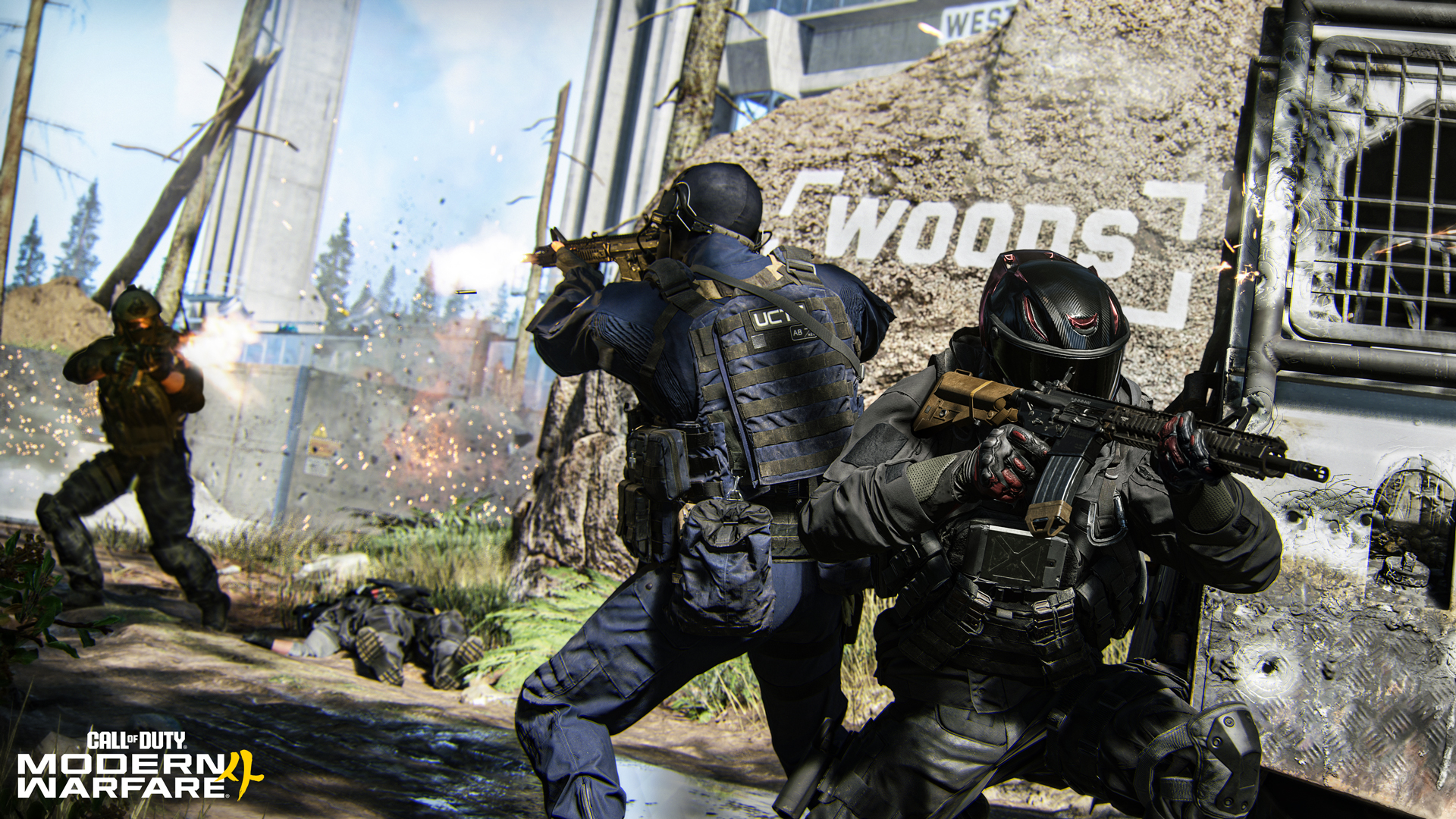
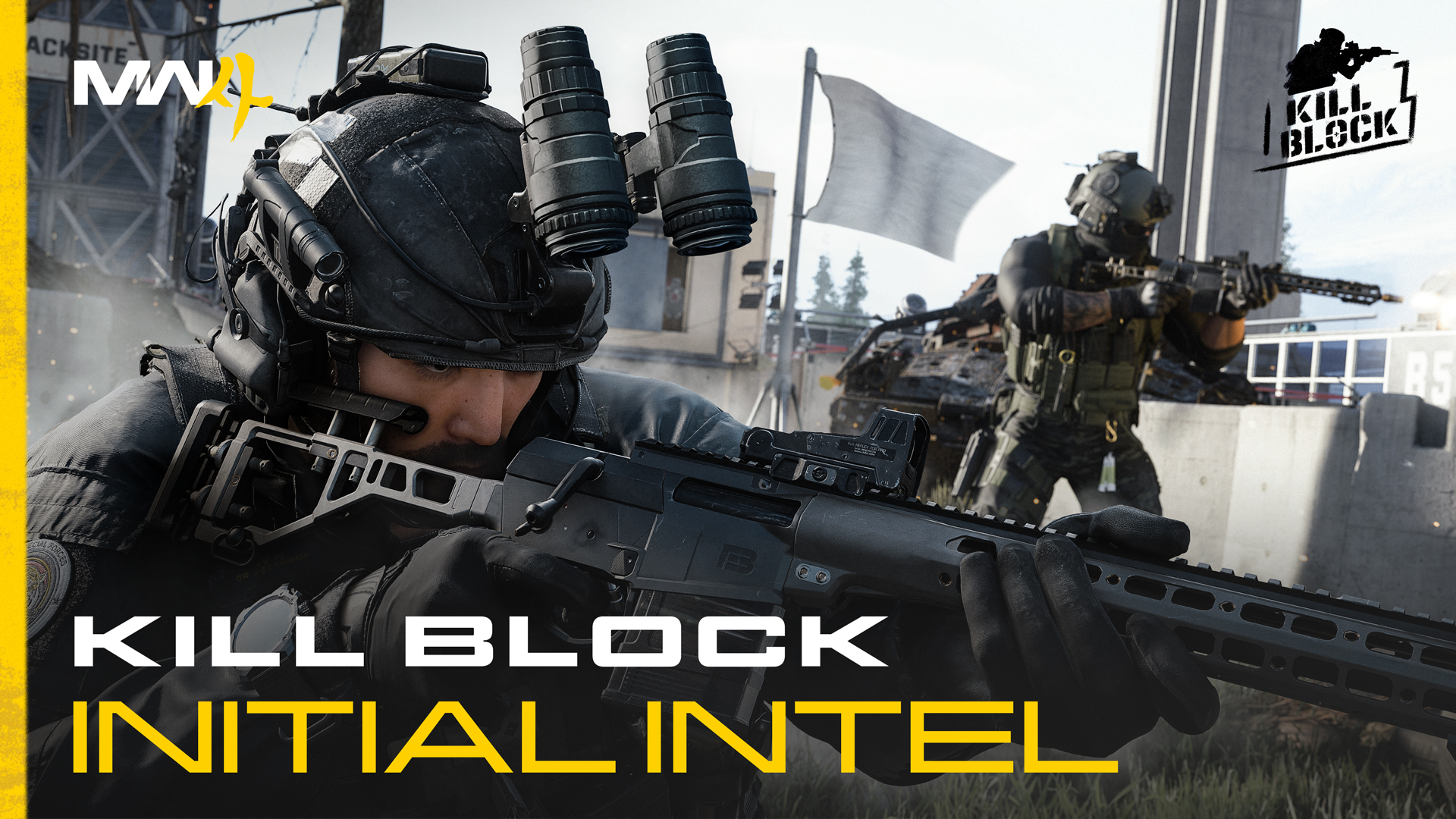
Welcome to the West Bridge Advanced Military Training — codenamed Kill Block — an off-the-books facility specializing in modular Multiplayer battlegrounds centered on reconfiguring combat layouts. Designed as a live-fire training environment, Kill Block maps reconfigure between matches, forcing players to reassess sightlines, routes, and combat spaces.
At its core, Kill Block is assembled from three modular sections — two outer areas (“End Slabs”) and one central combat space (“Central Slab”) — that combine into a new combat configuration after each match called a “Combo”. Each section and how they are positioned allows for multiple possible Combo variants, creating hundreds of unique layout combinations that reshape combat flow.
Most map sections are entirely new, while others draw inspiration from iconic locations across Modern Warfare history. At launch on October 23, more than 500 configurations are possible, with layouts reconfiguring between matches and throughout Gunfight rounds to transform sightlines, routes, cover placement, and engagement pacing.
Kill Block supports expanded Gunfight experiences, including 3v3 and the new Gunfight 10v10 mode at launch, with future support planned for more core Multiplayer modes.
Kill Block: Learn the layout. Adapt when it changes.
Let’s take a closer look at the West Bridge Advanced Military Training Facility:
An impressive feat of military engineering, this self-contained compound features a perimeter of eight massive concrete towers that house an array of electronics, motors, and pulley systems. These are attached to three massive steel-reinforced Slabs that sit within the facility's perimeter, each resting on a network of rail-mounted wheel assemblies known as bogies that travel along tracks embedded above and below the training area.
When a change of map occurs between matches, the active Slab decouples from the others and is slowly lowered by electric motors into a dedicated storage chamber beneath the arena. A synchronized motor array then switches the rail network to a different Slab, which is winched into position and locked in place, transforming the combat space for the next exercise.
The result is an ever-changing Combo map that enables Tier One Operator teams to experience a variety of Shoothouse-style environments across numerous combat scenarios.
What are Kill Block Combos and Slabs?
Slabs are sectional environments constructed specifically for military training purposes, and there are three linked together in every Kill Block match. Mocked up streets, compounds, and urban blocks provide faithful facsimiles of real-world environments, with many assembled from shipping containers, timber-framed structures, temporary facades, and training props. This is a full-scale tactical set, each built to evoke the character of an operational environment with recognizable spaces, and constructed with a variety of scenery, vantage points, verticality, chokepoints, routes, low openings, and sightlines that typically extend across to an adjacent Slab, and occasionally across the entire map. Three of these Slabs fitted together form a Combo, which is the entire map a match takes place on.
Checking Slabs more thoroughly, you can expect to find parked trucks, burned-out tanks and cars, stacked gabions, cargo containers, live-fire training rooms, prefabricated multi-level buildings, concrete blocks, barriers, and walls, and a few tactically important doors you can shoot open, barge through or open slowly with stealth in mind. Construction markings, grenade marks, arrows, named labels for each Slab, training targets, named rooms (using duct tape floor markers), number markings, and a host of other scenic elements are there to assist in your spatial awareness as you learn the environments.
Slab Configurations
Each set of three Slabs — a Combo — is rectangular in shape, and always the same footprint size (roughly that of the Modern Warfare (2019) map “Shoot House”). Every Slab is self-contained, but with the necessary openings to allow flow throughout the map to adjacent Slabs. Every match involves traversing all three of these slabs, which are connected along their longitudinal edges to form the entire Combo playspace. Here’s how the two slab types differ:
End Slabs: There are always two End Slabs on each Kill Block match map, and each of them is one third of the play space and connects to each side of the Central Slab. Teams enter via an infil armory room and into their End Slab, with a perimeter wall gate closing behind them at the start of a match. End Slabs always have these gates (labeled A or B) on the outer wall, directly opposite the other, and in non-Gunfight modes, team members will spawn in and around the back portion of their End Slab.
After spawning, teams with tactical know-how usually move forwards towards the Central Slab with the safety off.
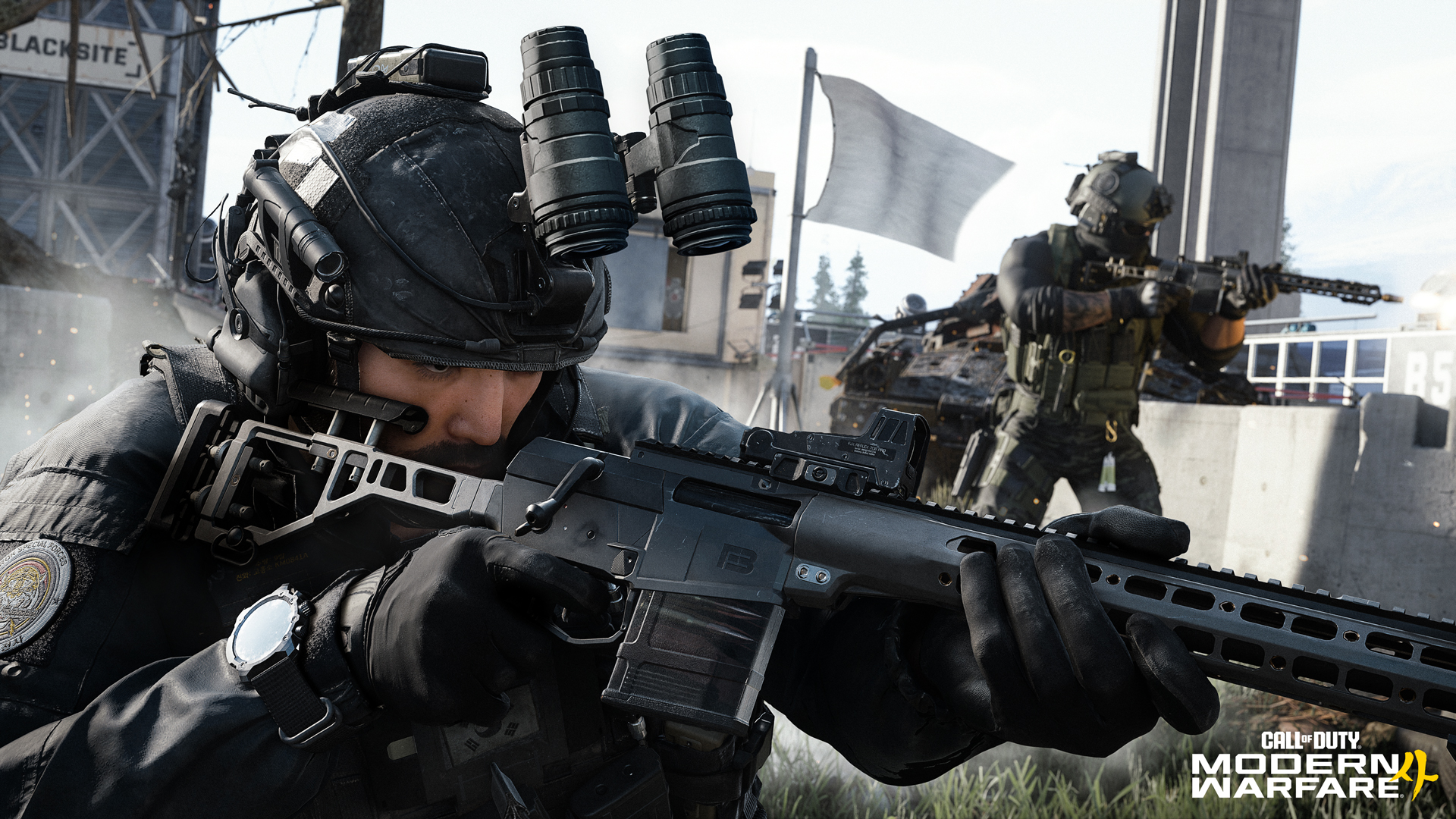
Central Slabs: Linked on each side to an End Slab, the middle of the map offers scenery particularly crafted to enhance combat coming in from multiple angles, with a variety of commanding vantage points, chokepoints, and defensive positions. Teams can move freely between all three slabs.
Environmental Challenges
Certain Slabs are fitted with military-grade weather simulation arrays along with powerful fans that propel vast quantities of misting water or snow across the slab’s entirety. With inclement conditions and the possibility of rain or snow flurries, Operators need to adapt to shifting visibility, altering sightlines, and other evolving tactical conditions. Expect weapons to also react to the weather, with ice particles or a wet sheen building up on the weapon until you swap armaments or reload.
Veteran Terrain
While most Slabs are entirely new, others recreate iconic locations including Crash from Call of Duty 4: Modern Warfare (2007), Storage Town from Call of Duty: Warzone’s Verdansk map and Shoot House from Modern Warfare (2019). Paired with different neighboring Slabs, these familiar spaces play in entirely new ways. Though drawn from iconic maps, these Slabs are fundamentally recontextualized by the randomized environments surrounding them, allowing familiar terrain to deliver both the classic moments you remember and entirely new tactical experiences.
Kill Block Map Situational Overview
Every Kill Block match is fought across a random selection of three Slabs bolted to each other. When this larger map in its entirety is measured, the entire area is roughly the same size as the Modern Warfare(2019) map “Shoot House”.
For those needing more tactical awareness, the perimeter of the map has indications of smaller sections that serve as visual reference points, helping you identify your location more rapidly while you glance at the mini-map for red dots. Along the map’s longer north and south wall perimeter, there are six “A” and “B” sectors respectively, while the shorter east and west walls have two “C” and “D” sectors, each between an entrance gate where each team spawns. You’re able to tell where you are due to each perimeter section’s letter and number emblazoned at intervals around the map’s perimeter wall.
Use all this knowledge as you learn your Kill Block environments to pinpoint enemies over your comms and learn the maps you’re dropped into.
“Safety Off Beyond This Point”: General Tactical Awareness
Learn. Adapt. Dominate
- SUMMARY: Know your terrain by studying each Slab's layout, movement options, and sightlines, then apply that knowledge in a changing mix of combat environments.
As you learn the layouts of the different slabs, you’re able to tactically piece together sightlines that carry across the entire Kill Block space itself. It’s worth remembering there are spray-painted signs branding a wall that names most slabs, as well as the names of each Slab appearing during the infil as the map reconfigures between matches, enabling you to quickly ascertain which slabs you’re playing on and learn their layouts the longer you play.
Furthermore, with Modern Warfare 4’s full suite of refined and fluid movement mechanics, expect to be able to scramble across Slab scenery with the same rapid dexterity as you would during a Core Multiplayer match. This includes vertical positioning: climbing onto rooftops, atop containers, onto upper balconies, and ascending to other areas that offer advantageous sightlines at the expense of exposure. Kill Block’s adaptive Multiplayer maps have been designed to offer tactical benefits and creative challenges no matter where you’re positioned.
Kill Block Slab Examples
The following examples and the video footage within this Blog highlight just a selection of the dozens of Slabs available at launch, each offering its own tactical opportunities and combat challenges. Note that the names of Slabs are subject to change prior to the game’s launch:
[ Ambush ] // Central Slab: A slice of the classic Call of Duty 4: Modern Warfare map, this training facsimile features a convoy-clogged main road with blown-out pre-fab buildings either side, with plenty of elevated sniper nests that look across the adjacent End Slabs.
[ Blacksite ] // End Slab: Three prefabricated structures are positioned around the slab with open access between each of them, with mud and grass thoroughfare, a rusted van, open cargo container, and stacked military gabions as well as concrete barrier stacks to tactically maneuver between.
[ Killhouse ] // End Slab: A section of the seminal Call of Duty 4: Modern Warfare map, with a similar aesthetic, with gabions placed at corners of prefab walls, some with gaps to climb over, with a central kill box in the middle, and smaller scenic cover opportunities along the far edge of the Slab.
[ ME-Town ] // Central Slab: A kill box dirt courtyard surrounded by four prefabricated structures, roughly in each corner, some with significant interior and roof top space available for long-range overwatch coverage. The main turquoise building is a warren of tight rooms and scramble points constructed with mobility training in mind.
[ Snow Block ] // End Slab: A maze of stacked gabion walls of varying lengths, along with tactically positioned open cargo containers and other concrete blocks. Operators must weigh the benefits of overwatching from the top of these fortifications, as your line sights improve at the expense of cover.
[ Trench ] // Central Slab: A no-man’s land of sunken mud walls and pill boxes with sandbags, tires, and wooden trusses keeping the dirt trenches from collapsing. The action is particularly fraught in the exposed middle with concrete barriers, and a burned tank offer a modicum of protection and sight lines.
Kill Block: Live-Fire Gunfights
High-Stakes Team Combat
- SUMMARY: Gunfight returns with 3v3 and the all-new 10v10 modes, where shared loadouts, single-life rounds, and decisive teamwork determine every victory.
On October 23, Kill Block launches with expanded Gunfight experiences, featuring both 3v3 and the all-new Gunfight 10v10 modes. Every round pits teams against one another in fast-paced, single-life combat with every elimination carrying weight and every surviving teammate influencing a round outcome. Communicate effectively, capitalize on opportunities, and execute under pressure to claim victory.
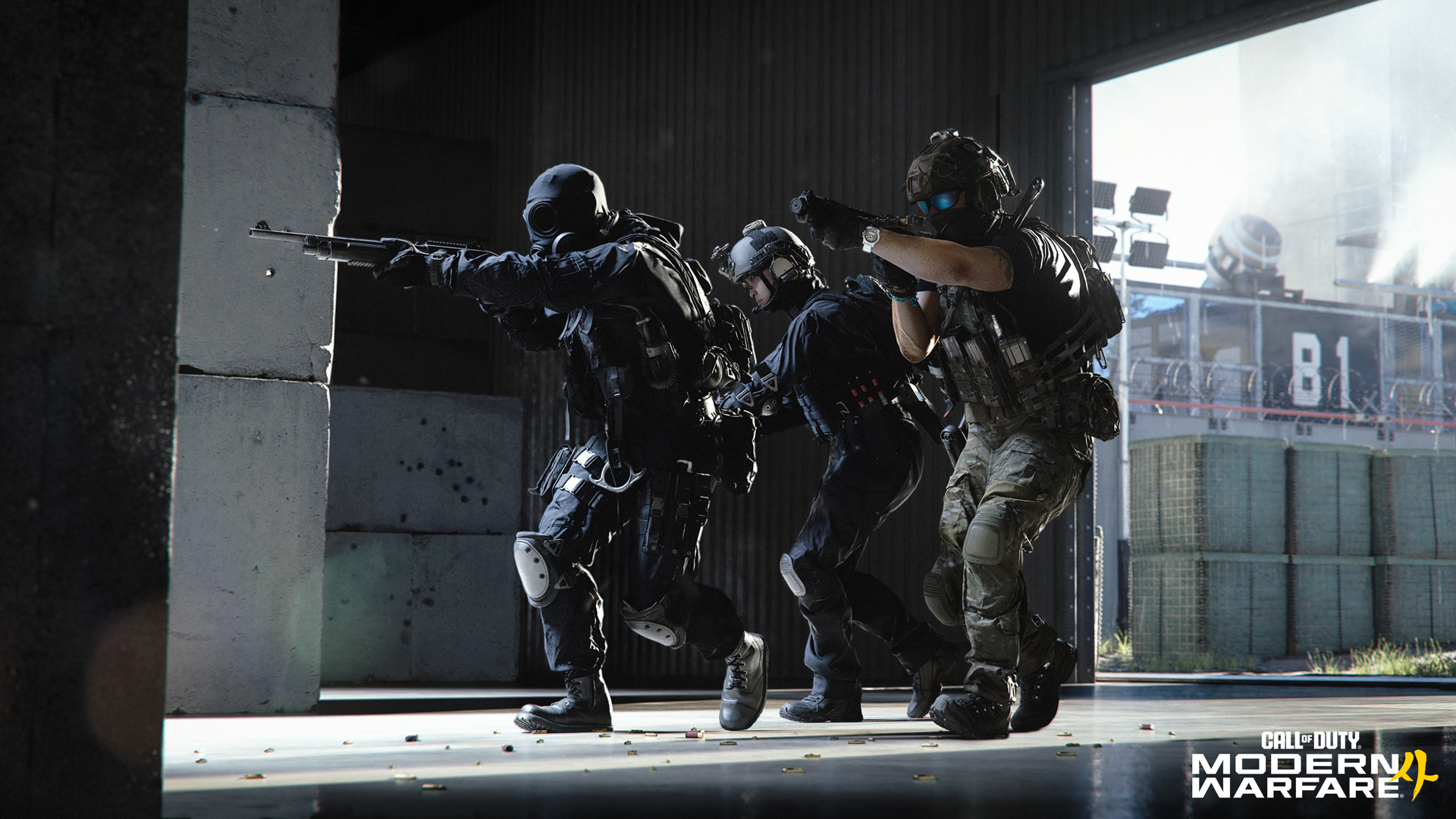
Each round begins with all Operators equipped with the same randomized Primary and Secondary Weapons, Tactical and Lethal Equipment, ensuring every player starts on equal footing. There are no custom Loadouts to rely on, placing the emphasis squarely on teamwork, weapon proficiency, and tactical decision making. If neither team is eliminated before the round timer expires, an Overtime Flag deploys into the combat zone, forcing both teams to converge on it. Capture this Flag to claim victory or fight to maintain the health advantage if time runs out.
During Kill Block Gunfight matches, teams swap sides after the first round. After the second round ends, the three Slabs change to a new Combo (map), a new random loadout is equipped, and the match continues. Combos continue to change every two rounds until one of the teams wins six rounds.
While Gunfight 3v3 and 10v10 headlines Kill Block at launch, the West Bridge Advanced Military Training Facility has been engineered as a modular combat platform capable of supporting additional core Multiplayer modes in future post-launch seasons. Players can expect the facility's adaptive battlegrounds to provide fresh tactical challenges across an expanding variety of Multiplayer modes.
Beyond Kill Block: The Complete Multiplayer Offering
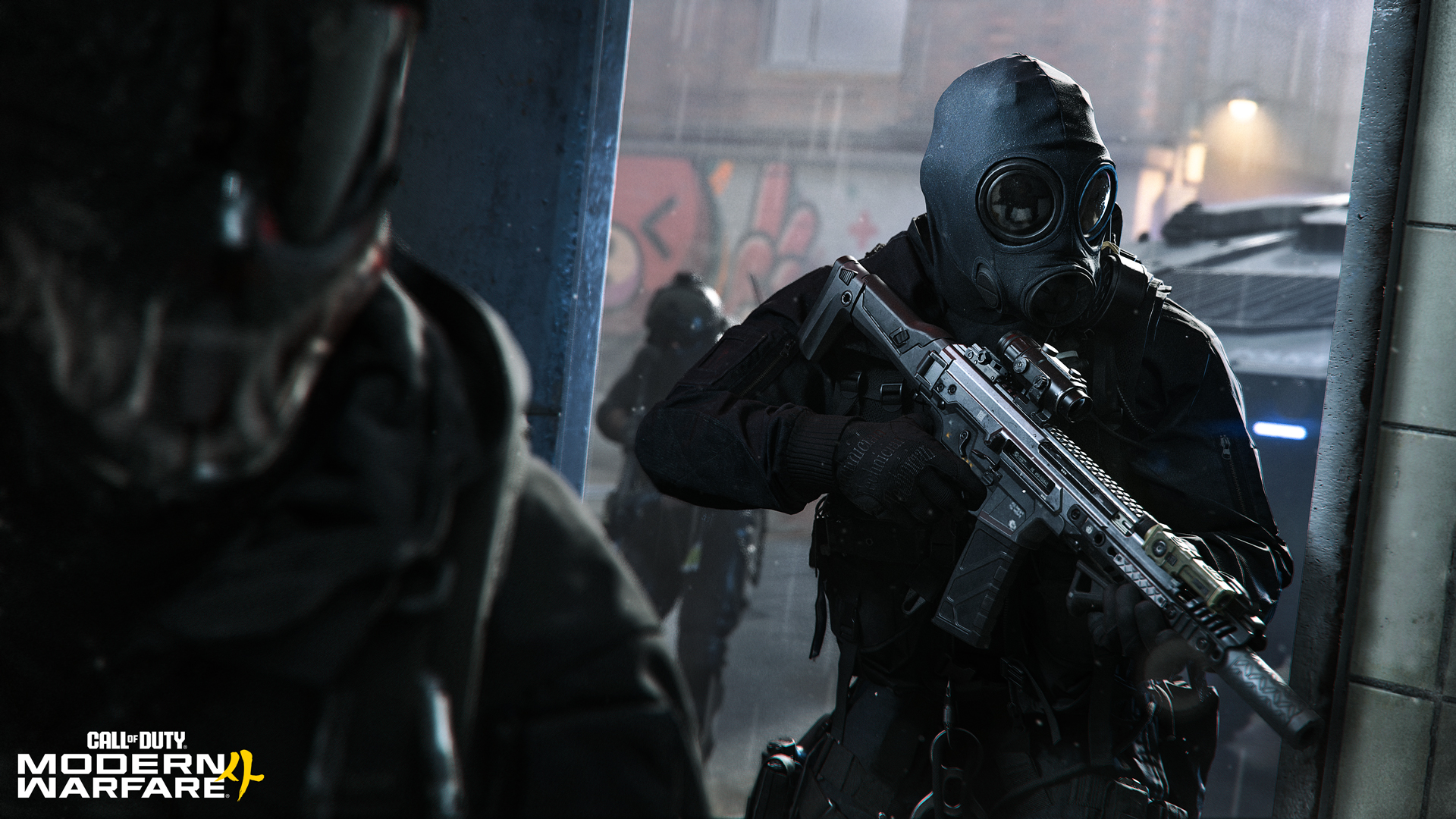
From the adaptive battlegrounds of Kill Block to the globe-spanning Core MP maps, large-scale Ground War battles, tactical one-life modes, fan-favorite respawn and round-based playlists, and Party Modes, Call of Duty: Modern Warfare 4 Multiplayer is built for every possible engagement. Alongside Kill Block, players can look forward to:
- 12 grounded Core multiplayer maps set across globally diverse locations, each built around distinct visual identities and tactical flow, with two additional favorites dropping just after launch.
- Every Core map features its own custom insignia and visual branding inspired by the location, operation, or conflict surrounding the environment, from Lotus (a Korean fishing village in the aftermath of an amphibious assault) to Rooftops (the snow-lined rooftops of a New York Hotel) and Mumbai (a fugitive’s hideout inside a dense residential district).
- Larger scale battles with armored vehicles across expansive maps, featuring brutally intense combined-arms warfare.
- A full suite of Multiplayer Modes and Hardcore variants, from fan favorites like Team Deathmatch, Domination and Hardpoint to new modes with full reveals in the weeks to come.
- Expect Party Modes to also arrive at launch, with additional modes coming shortly after release.
Whether you prefer chasing the objective, coordinating with your squad, or simply racking up eliminations, there's a mode built to match your playstyle.
Additional Intel Incoming
Stay tuned to the Call of Duty Blog for the latest official Modern Warfare 4 intel as we move toward additional information drops before the Modern Warfare 4 launch on October 23.
Preorders are available now at participating retailers, in-game, on platform stores, or at CallofDuty.com. For more information on preordering, including Vault Edition content, rewards, and a special Loyalty Discount, see the Preorder blog here.
Development Credits
Call of Duty: Modern Warfare 4 development is led by Infinity Ward and will be available globally on XBOX Series X|S, PlayStation 5® and PC via Battle.net, XBOX on PC, Steam, and Nintendo Switch 2 on Friday, October 23, 2026.
Call of Duty: Modern Warfare 4 for the PC delivers a fully optimized experience, led by Infinity Ward in partnership with Beenox, for Battle.net, Blizzard Entertainment’s online gaming service, XBOX on PC, and Steam.
Infinity Ward, in partnership with Digital Legends, is developing Modern Warfare 4 natively for Nintendo Switch 2.
Additional development by in alphabetical order: Activision Central Design, Activision Central Technology, Activision QA, Activision Shanghai, Beenox, Demonware, High Moon Studios, Raven Software, Sledgehammer Games, and Treyarch.
©/TM/® 2026 Activision Publishing, Inc.
For more information, please visit www.callofduty.com and www.youtube.com/callofduty, and follow @Activision and @CallofDuty on X, Instagram, and Facebook. For Call of Duty Updates, follow @CODUpdates on X.
Join Call of Duty's Official Discord to get the latest updates and maybe even meet your next squadmate!